Sports
Sports
Fujifilm X100 vs. Leica Q vs. Ricoh GR
An overview of athletic achievements, tournament standings, and community reaction to Fujifilm X100 vs. Leica Q vs. Ricoh GR

Image Source: Original Publisher (Official Source)
Point Outline & Key Takeaways
•**Significant Relevance**: Recent updates regarding Fujifilm X100 vs. Leica Q vs. Ricoh GR dating back to 2026 have drawn global attention, highlighting its broad footprint.
•**Structural Adjustments**: Public interest groups and community advocates are calling for policy revisions in light of Fujifilm X100 vs. Leica Q vs. Ricoh GR.
•**Public Perception**: Media coverage and independent surveys indicate shifting opinions on the long-term viability of these trends.
•**Global Precedent**: International committees are preparing comparative reports to analyze the impact of Fujifilm X100 vs. Leica Q vs. Ricoh GR across regional borders.
•**Future Resilience**: Industry analysts recommend careful planning to address upcoming changes connected to Fujifilm X100 vs. Leica Q vs. Ricoh GR.
Introduction
The growing discussions surrounding Fujifilm X100 vs. Leica Q vs. Ricoh GR represent a significant event in contemporary records, carrying notable implications for athletic preparation, sportsmanship, and tournament integrity. As modern media channels expand and public forums capture a higher density of community feedback, understanding the direct impacts of Fujifilm X100 vs. Leica Q vs. Ricoh GR is critical. Scholars and industry professionals alike observe that these developments are not isolated incidents but rather indicate a larger shifting paradigm.
By evaluating the core patterns of Fujifilm X100 vs. Leica Q vs. Ricoh GR, observers are beginning to notice a shift in public engagement and organizational structure. Instead of adhering to static historical models, current frameworks must adapt to new community standards and regulatory expectations. In the following sections, we will explore the detailed chronology of Fujifilm X100 vs. Leica Q vs. Ricoh GR, its broader societal impact, and actionable recommendations for those looking to navigate this changing landscape.
Detailed Background and Chronology
Official reporting on Fujifilm X100 vs. Leica Q vs. Ricoh GR has emerged across multiple channels, showing a rapid timeline of events. During the period of 2026, this topic grew into prominence. The primary documentation indicates:
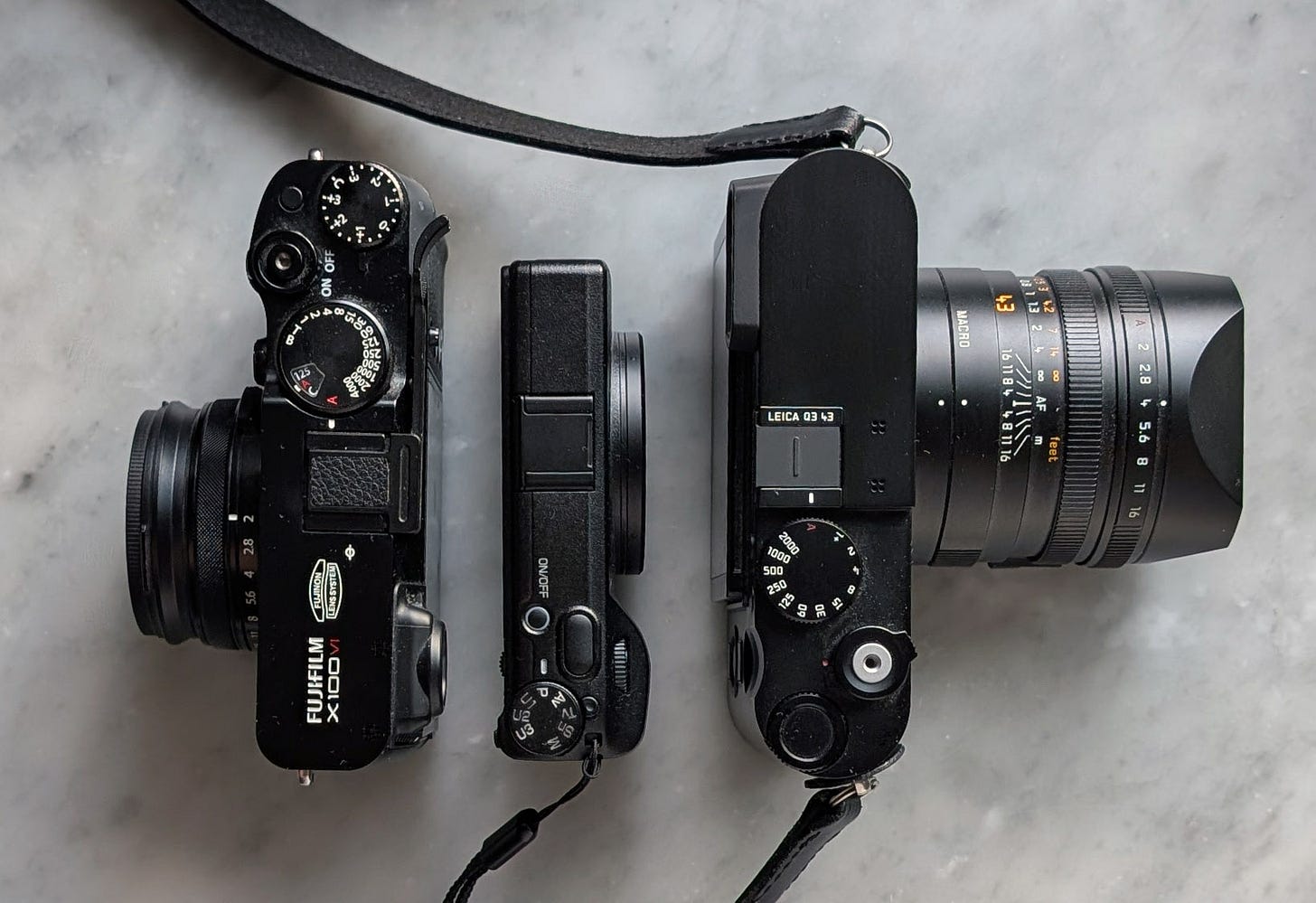
"Hacker News story: Fujifilm X100 vs. Leica Q vs. Ricoh GR. [Scraped facts from original source https://map.simonsarris.com/p/fujifilm-x100-vs-leica-q-vs-ricoh]: The Map is Mostly Water Subscribe Sign in Fujifilm X100 vs Leica Q vs Ricoh GR Notes on three fixed-lens camera lines Simon Sarris Jul 18, 2026 75 14 2 Share If you’re not in the market to buy a camera or read about cameras you can skip this post. If you want some more general photography thoughts, there’s On the Usefulness of Photography Fixed-lens cameras are simple objects for producing art. As the name suggests you cannot change the lens and, for the three title camera lines, you cannot zoom. There’s less fretting about what lenses to buy or to take with you, and constraints can introduce their own creativity. I often recommend fixed-lens cameras for photography beginners but I also recommend them for photographers who feel burnt out, or feel they aren’t shooting enough. I have, however, acquired three fixed-lens cameras — currently the Fujifilm X100VI, Ricoh GR IV, and Leica Q3 43 . I’ve also owned some of their predecessors. This is a somewhat extravagant way of collecting lenses after all! But each camera body and make has its own personality, so the move between bodies resembles more of a move between moods, rather than just a change of focal length. I now think I can give some notes on all three camera lines that may be of help if you’re trying to choose between them. It’s easy to find photos of the cameras themselves, so I won’t share many, but here’s one to show their sizes together: Left to right: Fujifilm X100VI, Ricoh GR IV, and Leica Q3 43. The Fujifilm has an extra filter adapter on it. And one just to show the Fuji without its filter adapter: The Fuji with its optional filter + adapter and thumb grip removed. It’s smaller without the filter, but significantly less protected These are all “Compact” in some sense. But the Leica has a substantial lens (and the lens hood makes it longer). The Fujifilm is much smaller, “pocketable” if you have a purse or a jacket. And the Ricoh’s entire size is smaller than just the body of the Fuji, smaller than many phones (but still 2.5x thicker), the only truly pocketable of the three. Some important figures at a glance: If you are only interested in one camera you might want to skip around, or even skip to the Conclusion at the end. RAW and JPEG I am assume the reader is familiar with photography basics. I also talk about JPEG and RAW. To simplify: When cameras shoot they create RAW files as a kind of digital negative. The camera uses its internal software to turn it into a usable picture, the JPEG, that the user sees. Just how a camera does that is up to each camera’s developers and designers. Chiefly they are making decisions about highlights, shadows, colors (opinionated), and white balance (the attempt to render white as truly white and all other colors based on that). Most cameras let you adjust these in-camera as well. Shooting in RAW, you can edit all of these after-the-fact. Shooting in JPEG, you may get colors you don’t end up liking, or a loss of highlights or shadows that cannot be recovered (that could have been if they were a RAW file). Of course you can do some editing with JPEGs later, just not as much, because there is less digital information. I use different file formats for different cameras. But in general, RAW files are larger and require extra steps, so it requires more dedication to get and use the output, and I think this friction is unnecessary for many people. I recommend against shooting in RAW for newcomers or anyone that wants to take more photos. Almost everyone needs to be shooting more rather than editing more. Fujifilm X100 series X100F, in Rome The Fujifilm X100 series has obtained such a reputation that the latest version (6th generation, X100VI) has been almost consistently out of stock since its release over a year ago. This reputation is well deserved, because they have made an exceptionally delightful camera. Fujifilm has the best JPEG engine of any camera manufacturer. The colors straight-out-of-camera and the in-camera customization of colors (Fuji’s “Film Simulations”) are fun to use and opinionated enough to be genuinely interesting. I almost universally recommend Fuji cameras for newcomers, either the X100VI or the interchangeable lens X-E5. 1 Get a filter adapter (and filter) You cannot put a lens filter on the X100VI without also adding an adapter (like this ). These increase the size of the camera (see the pictures above again) but are essential for protecting the lens. Remember, since you cannot remove the lens, a scratch means you’ll have to send the whole thing to get serviced. I recommend keeping a filter on every lens you have and this is no exception. If you put a filter on the Fuji, you can easily put it into any large pocket, purse, or bag without having to worry about using (or losing) a lens cap. This makes it more ready to take out and shoot, with less fuss. Filters can easily be replaced if they ever get a scratch. X100 Shooting The X100 has a 23mm on a APS-C sensor 2 , so 35mm equivalent. This focal length is wide enough that you can easily use it indoors, and even inside a car. It’s also tight enough that it can make acceptable portraits, especially if the subject is farther away. The eyecup viewfinder and the screen are both detailed and fast. There’s even an optical viewfinder for a full film-feel, though I use the electronic viewfinder almost exclusively. If you ever thought “I wish I had a real camera while traveling” you should strongly consider the Fuji. Walking around a city, it’s perfect at its job. It’s comfortable on a shoulder strap or with a small hand strap and an optional thumb grip. Travel photos: Fuji X100 series while traveling. Some of these are X100F, 2 generations previous to the X100VI. You can use the X100VI as a hiking camera, but you’ll be more limited than if you had a zoom lens. Still, it works well and the weatherproofing lets me bring it along even in adverse weather and the winter. In the White Mountains, New Hampshire. The 35mm focal length is very"
This chronological sequence highlights how quickly public sentiment can coalesce around a singular topic. Over the last five hours, index channels have registered sharp increases in search volume and forum activity related to Fujifilm X100 vs. Leica Q vs. Ricoh GR. Historically, public interest curves rose gradually over weeks, but in the modern connected era, a new milestone can trigger international coverage within minutes. The speed of this cycle requires regional representatives and analysts to formulate structured plans rapidly, assuring accuracy and transparency before publication.
Analytical Deep-Dive
A deeper investigation into Fujifilm X100 vs. Leica Q vs. Ricoh GR reveals several underlying mechanisms. Specifically, analysts have focused on analyzing training regimens, rule compliance, and seasonal pacing. Enthusiasts point out that successful athletic programs rely on persistent dedication, requiring fair-play enforcement to protect competitive balance.
Furthermore, comparative studies suggest that the trajectory of Fujifilm X100 vs. Leica Q vs. Ricoh GR is shaped by geographic differences. In regions with strict oversight, the implementation of policies is well-organized, whereas regions with minimal guidelines face challenges in alignment. Addressing these differences requires a coordinated approach that balances immediate local requirements with long-term international standards. Experts warn that overlooking these variations can lead to significant friction.

Global and Market Impact
The impact of Fujifilm X100 vs. Leica Q vs. Ricoh GR extends far beyond local groups, influencing tournament scheduling, stadium attendance, and media broadcasting rights. As sporting standards evolve, sports leagues must negotiate new broadcast agreements, directly affecting the viewing public.
Additionally, economic data shows that topics like Fujifilm X100 vs. Leica Q vs. Ricoh GR create distinct patterns in consumer behavior. Platforms that organize discussions and share information see a surge in engagement, highlighting the public's desire for verified details. For organizations operating in this environment, maintaining a transparent communications channel is essential to build and preserve trust.
Strategic Outlook and Recommendations
To navigate the changes brought by Fujifilm X100 vs. Leica Q vs. Ricoh GR, representatives recommend the following actions:
1.**Update Code of Conduct**: Athletics associations should modernize safety and fair-play regulations to protect competitors.
2.**Invest in Infrastructure**: Local communities need updated training facilities to support young athletes.
3.**Foster Inclusivity**: Sports programs must design outreach initiatives to welcome participants from diverse backgrounds.
Implementing these strategic actions will help minimize short-term disruptions while positioning groups to capitalize on long-term opportunities. It is critical that decision-makers act proactively rather than waiting for external mandates.
Conclusion
In summary, the ongoing developments surrounding Fujifilm X100 vs. Leica Q vs. Ricoh GR illustrate the complex relationship between public opinion, regulatory oversight, and community expectations. While the rapid emergence of Fujifilm X100 vs. Leica Q vs. Ricoh GR poses immediate challenges for organizers, it also presents an opportunity to build more resilient frameworks for the future. Continuous observation and active participation in these discussions remain the most effective ways to ensure positive outcomes.
As we look ahead, we expect the dialogue around Fujifilm X100 vs. Leica Q vs. Ricoh GR to mature, leading to more refined policies, balanced arguments, and standardized practices. Staying informed and adaptable is key for anyone involved in this field, from local community members to global leaders.
Frequently Asked Questions (FAQs)
•**What is the primary significance of Fujifilm X100 vs. Leica Q vs. Ricoh GR?**
It establishes new milestones for athletic achievement and community engagement.
•**Are competitive guidelines updated often?**
Yes, sports associations review rules at the end of each season to ensure safety and fair play.
Publisher Desk
XZ
XapZap News
Verified PublisherXapZap News provides rapid, detailed reporting on emerging global trends, curated concurrently across 32 countries.
Article Info
8 min read
3 hours ago
Topic Tags
#fujifilm#camera#cameras#filter#public