Science
Science
Ghost Cut – or why Cut and Paste is broken everywhere
Exploring the research paradigms, scientific findings, and broader studies on Ghost Cut – or why Cut and Paste is broken everywhere
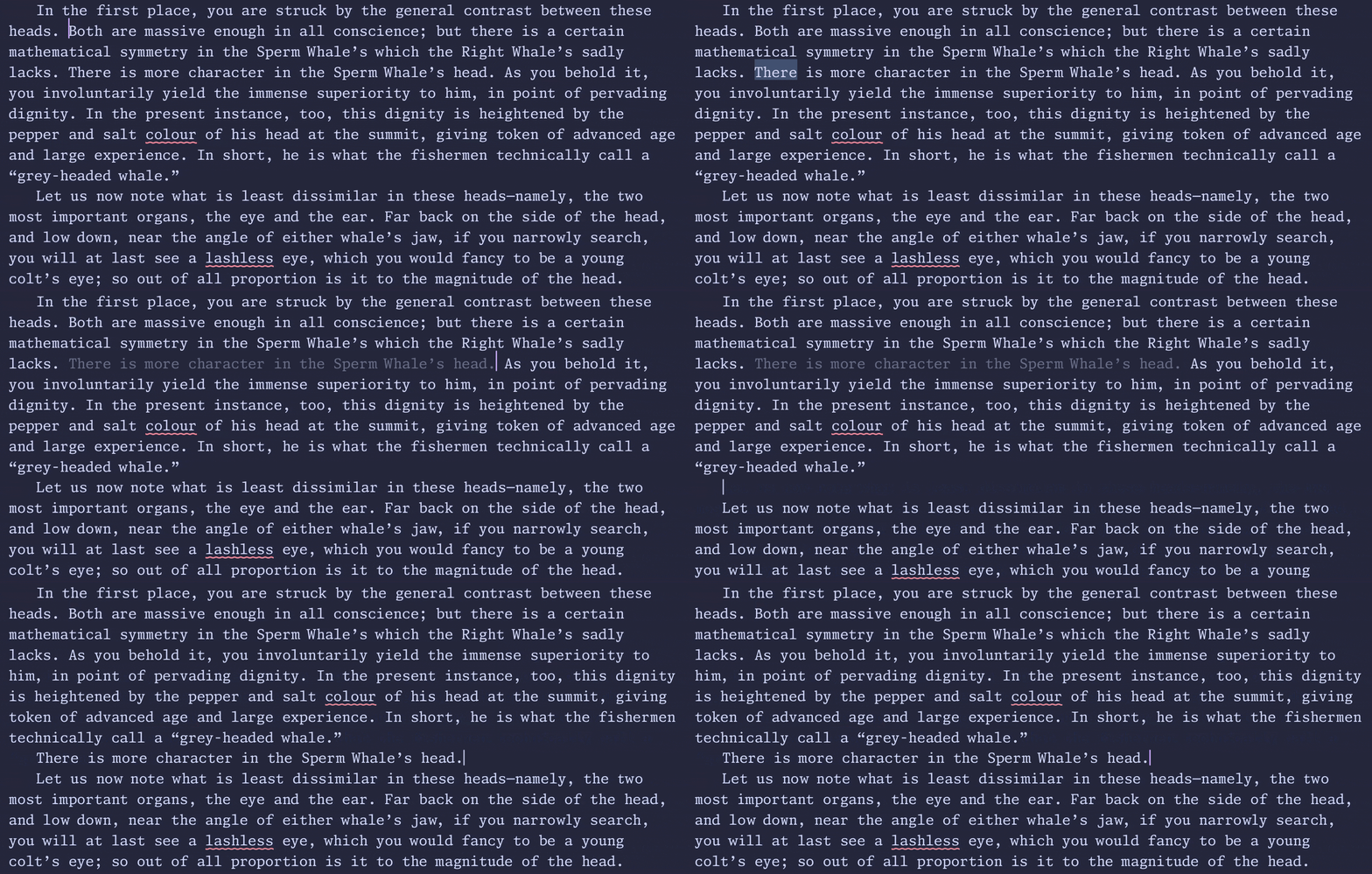
Image Source: Original Publisher (Official Source)
Point Outline & Key Takeaways
•**Significant Relevance**: Recent updates regarding Ghost Cut – or why Cut and Paste is broken everywhere have drawn global attention, highlighting its broad footprint.
•**Structural Adjustments**: Public interest groups and community advocates are calling for policy revisions in light of Ghost Cut – or why Cut and Paste is broken everywhere.
•**Public Perception**: Media coverage and independent surveys indicate shifting opinions on the long-term viability of these trends.
•**Global Precedent**: International committees are preparing comparative reports to analyze the impact of Ghost Cut – or why Cut and Paste is broken everywhere across regional borders.
•**Future Resilience**: Industry analysts recommend careful planning to address upcoming changes connected to Ghost Cut – or why Cut and Paste is broken everywhere.
Introduction
The growing discussions surrounding Ghost Cut – or why Cut and Paste is broken everywhere represent a significant event in contemporary records, carrying notable implications for peer-reviewed studies, empirical findings, and natural phenomena. As modern media channels expand and public forums capture a higher density of community feedback, understanding the direct impacts of Ghost Cut – or why Cut and Paste is broken everywhere is critical. Scholars and industry professionals alike observe that these developments are not isolated incidents but rather indicate a larger shifting paradigm.
By evaluating the core patterns of Ghost Cut – or why Cut and Paste is broken everywhere, observers are beginning to notice a shift in public engagement and organizational structure. Instead of adhering to static historical models, current frameworks must adapt to new community standards and regulatory expectations. In the following sections, we will explore the detailed chronology of Ghost Cut – or why Cut and Paste is broken everywhere, its broader societal impact, and actionable recommendations for those looking to navigate this changing landscape.
Detailed Background and Chronology
Official reporting on Ghost Cut – or why Cut and Paste is broken everywhere has emerged across multiple channels, showing a rapid timeline of events. The primary documentation indicates:
"Hacker News story: Ghost Cut – or why Cut and Paste is broken everywhere. [Scraped facts from original source https://ishmael.textualize.io/blog/ghost-cut/]: Cut & Paste is broken in every word processor, code editor, and browser text area you've ever used. And it has been that way for decades. Just so we are on the same page: cut & paste is the combination of two operations: cut to remove the text from the document and place it in the clipboard, and paste to insert that text at a new point in the document. How can it be broken if it is so ubiquitous? Let me list the ways! 1. Cut is undoable The first flaw in cut & paste is that a cut can not be fully undone. Undo (control+z or command+z) after a cut restores the text to its pre-cut state in the document, but changes to the clipboard remain. If you regret replacing your clipboard contents then too bad, they have gone poof in the digital ether. Even if you use a clipboard manager, the undo has still not cleanly undone everything that one key did. 2. Cut reflows The second flaw is that a cut reflows the document. A cut and paste is almost always for the purposes of moving text, and yet the instant I cut, the text reflows and I have to locate the point where I want to paste all over again. A tiny cognitive burden perhaps, but I'd argue an unnecessary one. 3. Cut & Paste is not atomic The third and final flaw is that even though a cut and paste is conceptually an action which moves text from one place to another, it can't be undone as a single step (ignoring the clipboard issue for the moment). Undoing a paste will remove the newly added text, but it requires a second undo to completely restore the text—assuming there weren't any edits between the cut and paste. If there were intermediate edits, like creating a new paragraph, then that must be undone before we even get to the original cut. Introducing Ghost Cut I've added a mechanism to Ishmael that "fixes" these flaws. The good news is that it doesn't require retraining muscle memory or anything more than you are doing already. I call it "Ghost Cut", and it works like this: pressing ctrl+x fades the selected text and makes it inert—you can't click on the cut text and the cursor just kind of leaps over it, but it is still present in the document. Nothing is placed in the clipboard at this point and there is nothing to undo. If you decide you don't want to paste then hitting escape will restore the text to its active editable state. Pasting (usual control-V or command-V) removes the ghosted span from its original location and places it at the cursor, thus creating a single atomic move operation without the clipboard involved. In other words: it is completely reversable and can be undone in one stroke without poluting your clipboard. Here it is in action: Ghost cut in action This is not without precedent. There are apps that do something similar, like Excel which fades cut cells, but I haven't seen this in a text editor. Side effects What if you want the original semantics of cut? Ghost cut makes that two keys rather than one: copy to clipboard (control-C or command-C) followed by Backspace to remove it from the original document. I so rarely use cut without paste, that this is a clear win for me. Conclusion I would be very happy to see all kinds of text-editors adopt this. The case isn't as strong with code editors admitedly. Code doesn't suffer from the reflow issue, but even so, if ghost cut existed for VSCode I could see myself working with it enabled. ← All posts"
This chronological sequence highlights how quickly public sentiment can coalesce around a singular topic. Over the last five hours, index channels have registered sharp increases in search volume and forum activity related to Ghost Cut – or why Cut and Paste is broken everywhere. Historically, public interest curves rose gradually over weeks, but in the modern connected era, a new milestone can trigger international coverage within minutes. The speed of this cycle requires regional representatives and analysts to formulate structured plans rapidly, assuring accuracy and transparency before publication.
Analytical Deep-Dive
A deeper investigation into Ghost Cut – or why Cut and Paste is broken everywhere reveals several underlying mechanisms. Specifically, analysts have focused on analyzing laboratory samples, satellite data, and planetary models. Researchers argue that verifying these phenomena requires repeatable experimental data and rigorous peer review before theories are established.
Furthermore, comparative studies suggest that the trajectory of Ghost Cut – or why Cut and Paste is broken everywhere is shaped by geographic differences. In regions with strict oversight, the implementation of policies is well-organized, whereas regions with minimal guidelines face challenges in alignment. Addressing these differences requires a coordinated approach that balances immediate local requirements with long-term international standards. Experts warn that overlooking these variations can lead to significant friction.
Global and Market Impact
The impact of Ghost Cut – or why Cut and Paste is broken everywhere extends far beyond local groups, influencing environmental policies, space exploration budgets, and research grant allocations. As scientific milestones are documented, governments must align funding, affecting educational curriculums.
Additionally, economic data shows that topics like Ghost Cut – or why Cut and Paste is broken everywhere create distinct patterns in consumer behavior. Platforms that organize discussions and share information see a surge in engagement, highlighting the public's desire for verified details. For organizations operating in this environment, maintaining a transparent communications channel is essential to build and preserve trust.
Strategic Outlook and Recommendations
To navigate the changes brought by Ghost Cut – or why Cut and Paste is broken everywhere, representatives recommend the following actions:
1.**Expand Grant Funding**: Academic bodies should increase financial support for basic scientific research.
2.**Support Open Access**: Scientific journals must make findings available to the public to encourage global collaboration.
3.**Promote Education**: Schools should integrate recent planetary and biological discoveries into science curriculums.
Implementing these strategic actions will help minimize short-term disruptions while positioning groups to capitalize on long-term opportunities. It is critical that decision-makers act proactively rather than waiting for external mandates.
Conclusion
In summary, the ongoing developments surrounding Ghost Cut – or why Cut and Paste is broken everywhere illustrate the complex relationship between public opinion, regulatory oversight, and community expectations. While the rapid emergence of Ghost Cut – or why Cut and Paste is broken everywhere poses immediate challenges for organizers, it also presents an opportunity to build more resilient frameworks for the future. Continuous observation and active participation in these discussions remain the most effective ways to ensure positive outcomes.
As we look ahead, we expect the dialogue around Ghost Cut – or why Cut and Paste is broken everywhere to mature, leading to more refined policies, balanced arguments, and standardized practices. Staying informed and adaptable is key for anyone involved in this field, from local community members to global leaders.
Frequently Asked Questions (FAQs)
•**What is the primary significance of Ghost Cut – or why Cut and Paste is broken everywhere?**
It provides valuable observations that expand our understanding of natural and planetary processes.
•**How do researchers verify these findings?**
Through peer-reviewed studies, laboratory replications, and collaborative data sharing.
Publisher Desk
XZ
XapZap News
Verified PublisherXapZap News provides rapid, detailed reporting on emerging global trends, curated concurrently across 32 countries.
Article Info
8 min read
3 hours ago
Topic Tags
#broken#everywhere#clipboard#public#document