Health
Health
Is BPC-157 legal in 2026? What the FDA found
Analyzing public safety, clinical guidelines, and regulatory response to Is BPC-157 legal in 2026? What the FDA found
Image Source: empirical.health (Official Source)
Point Outline & Key Takeaways
•**Significant Relevance**: Recent updates regarding Is BPC-157 legal in 2026? What the FDA found dating back to 2026 have drawn global attention, highlighting its broad footprint.
•**Structural Adjustments**: Public interest groups and community advocates are calling for policy revisions in light of Is BPC-157 legal in 2026? What the FDA found.
•**Public Perception**: Media coverage and independent surveys indicate shifting opinions on the long-term viability of these trends.
•**Global Precedent**: International committees are preparing comparative reports to analyze the impact of Is BPC-157 legal in 2026? What the FDA found across regional borders.
•**Future Resilience**: Industry analysts recommend careful planning to address upcoming changes connected to Is BPC-157 legal in 2026? What the FDA found.
*Image Source: empirical.health*
Introduction
The growing discussions surrounding Is BPC-157 legal in 2026? What the FDA found represent a significant event in contemporary records, carrying notable implications for public welfare, safety parameters, and preventive medicine. As modern media channels expand and public forums capture a higher density of community feedback, understanding the direct impacts of Is BPC-157 legal in 2026? What the FDA found is critical. Scholars and industry professionals alike observe that these developments are not isolated incidents but rather indicate a larger shifting paradigm.
By evaluating the core patterns of Is BPC-157 legal in 2026? What the FDA found, observers are beginning to notice a shift in public engagement and organizational structure. Instead of adhering to static historical models, current frameworks must adapt to new community standards and regulatory expectations. In the following sections, we will explore the detailed chronology of Is BPC-157 legal in 2026? What the FDA found, its broader societal impact, and actionable recommendations for those looking to navigate this changing landscape.
Detailed Background and Chronology
Official reporting on Is BPC-157 legal in 2026? What the FDA found has emerged across multiple channels, showing a rapid timeline of events. During the period of 2026, this topic grew into prominence. The primary documentation indicates:
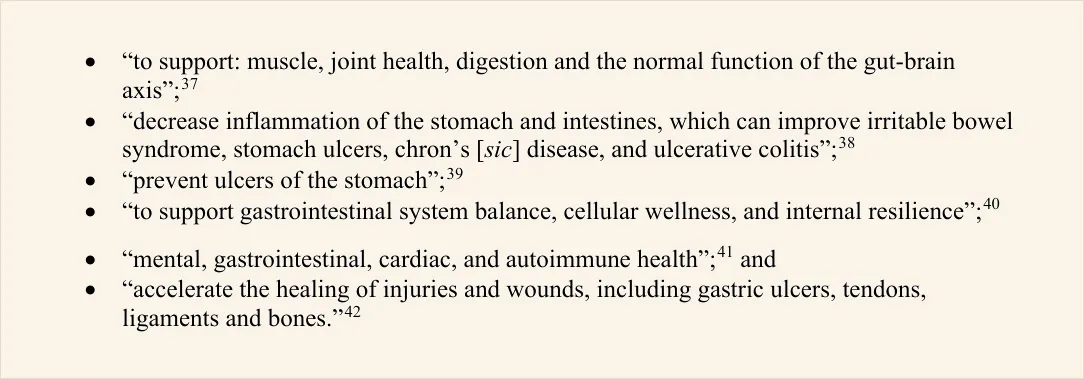
"Hacker News story: Is BPC-157 legal in 2026? What the FDA found. [Scraped facts from original source https://www.empirical.health/blog/bpc-157-fda-review/]: New: 100 biomarkers for $190 server-island-start Is BPC-157 legal in 2026? What the FDA actually found Brandon Ballinger · Jul 21, 2026 BPC-157 has more than 50 million tagged video views on YouTube and TikTok, over 100,000 members in peptide subreddits, and Google search volume that hit an all-time high in 2024. It’s sold as the “wolverine compound” for repairing tendons, ligaments, and joints. Pages announcing that BPC-157 is legal again are easy to find. The FDA published a 68-page review of BPC-157, and they found one clinical trial across the whole orthopedic literature: 17 patients, who received BPC-157 mixed with a second peptide. An advisory committee votes on July 23 and 24 about whether to add BPC-157 to the 503A bulk list, which would be a first step toward making compounded BPC-157 legal. The closing paragraph of the FDA’s evaluation of BPC-157. Source: FDA briefing document, Pharmacy Compounding Advisory Committee, July 2026 . In this article, we’ll review what the FDA found and the evidence base for BPC-157. Does BPC-157 work for tendon and joint repair? Unfortunately, there’s no reliable clinical evidence that BPC-157 repairs tendons, ligaments, or joints in people. A 2025 systematic review in HSS Journal identified 36 studies of BPC-157 in orthopedic sports medicine. Thirty-five were preclinical (i.e., in rodents or cell culture). The only human study enrolled 17 patients with knee pain and gave them both BPC-157 and thymosin beta-4, so any effect can’t be attributed to either one. Tendonitis was one of four conditions formally nominated to the FDA, alongside ulcerative colitis, Crohn’s disease, and celiac disease. The agency declined to evaluate three of them, writing that the nominations “did not include sufficient information” and that it “did not identify clinical studies using BPC-157 in these populations.” The 68-page review is entirely about ulcerative colitis, because that’s the only proposed use with any human trial behind it. Claims the FDA collected from compounding pharmacy, med spa, and clinic websites. Source: FDA briefing document, July 2026 . Side note: BPC-157 free base and BPC-157 acetate are different active ingredients, and both are sold as “BPC-157.” So some of the claims you see are conflated. Has BPC-157 been tested in humans? Roughly 80 people have received BPC-157 across five published studies. The longest anyone was treated in any of them is two weeks. Every published human study of BPC-157. Source: FDA briefing document, July 2026 . The routes those studies used and the routes people are buying don’t overlap much: The FDA states it plainly: “We found no studies that administered BPC-157 to humans via the proposed oral, SC, nasal, or transdermal ROA.” Is BPC-157 FDA approved? BPC-157 isn’t approved as a drug in any country, and isn’t available for compounding. A pharmacy can compound with a bulk substance only if that substance has a USP or NF monograph, is a component of an FDA-approved drug, or appears on the FDA’s 503A bulks list. BPC-157 satisfies none of the three (this is what this week’s vote is about). BPC-157 is also prohibited under category S0 of the World Anti-Doping Agency’s list . What happens after this week’s vote The advisory committee’s vote is a nonbinding recommendation on whether to add BPC-157 to the 503A bulk list. Adding any substance to the list requires rulemaking with notices and a comment period. So I wouldn’t expect compounded BPC-157 to be legal in the next few months; actual rulemaking will take time. IMO, the most informative data will come from clinical trials that are currently in progress. There’s one phase 2 trial of BPC-157 for hamstring strain in Shenzhen Hospital. It measures time to return to unrestricted sport and MRI-assessed injury volume at day 14. Completion is expected in February 2027. I think given the state of evidence, hopefully there will be a lot more clinical trials run. Get your free 30-day heart health guide Evidence-based steps to optimize your heart health. Subscribe"
This chronological sequence highlights how quickly public sentiment can coalesce around a singular topic. Over the last five hours, index channels have registered sharp increases in search volume and forum activity related to Is BPC-157 legal in 2026? What the FDA found. Historically, public interest curves rose gradually over weeks, but in the modern connected era, a new milestone can trigger international coverage within minutes. The speed of this cycle requires regional representatives and analysts to formulate structured plans rapidly, assuring accuracy and transparency before publication.
Analytical Deep-Dive
A deeper investigation into Is BPC-157 legal in 2026? What the FDA found reveals several underlying mechanisms. Specifically, analysts have focused on evaluating clinical standards, sanitization rules, and consumer transparency. Advocates emphasize that when health criteria are compromised, regional systems suffer, requiring legislative intervention to restrict harmful practices.
Furthermore, comparative studies suggest that the trajectory of Is BPC-157 legal in 2026? What the FDA found is shaped by geographic differences. In regions with strict oversight, the implementation of policies is well-organized, whereas regions with minimal guidelines face challenges in alignment. Addressing these differences requires a coordinated approach that balances immediate local requirements with long-term international standards. Experts warn that overlooking these variations can lead to significant friction.
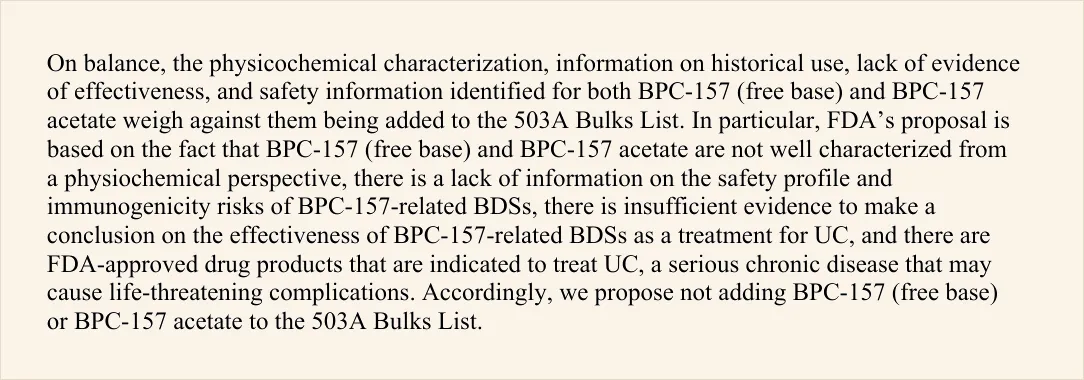
*Image Source: empirical.health*
Global and Market Impact
The impact of Is BPC-157 legal in 2026? What the FDA found extends far beyond local groups, influencing medical facilities, community health outcomes, and health insurance structures. When wellness rules are challenged, health clinics must expand resource allocation, directly affecting patient care standards globally.
Additionally, economic data shows that topics like Is BPC-157 legal in 2026? What the FDA found create distinct patterns in consumer behavior. Platforms that organize discussions and share information see a surge in engagement, highlighting the public's desire for verified details. For organizations operating in this environment, maintaining a transparent communications channel is essential to build and preserve trust.
Strategic Outlook and Recommendations
To navigate the changes brought by Is BPC-157 legal in 2026? What the FDA found, representatives recommend the following actions:
1.**Enforce Oversight**: Public health organizations should establish independent panels to review guidelines and maintain patient trust.
2.**Prioritize Transparency**: Educational campaigns should be launched to share health findings directly with local communities.
3.**Collaborate Internationally**: Healthcare systems must share resource strategies to manage regional outbreaks or systemic challenges.
Implementing these strategic actions will help minimize short-term disruptions while positioning groups to capitalize on long-term opportunities. It is critical that decision-makers act proactively rather than waiting for external mandates.
Conclusion
In summary, the ongoing developments surrounding Is BPC-157 legal in 2026? What the FDA found illustrate the complex relationship between public opinion, regulatory oversight, and community expectations. While the rapid emergence of Is BPC-157 legal in 2026? What the FDA found poses immediate challenges for organizers, it also presents an opportunity to build more resilient frameworks for the future. Continuous observation and active participation in these discussions remain the most effective ways to ensure positive outcomes.
As we look ahead, we expect the dialogue around Is BPC-157 legal in 2026? What the FDA found to mature, leading to more refined policies, balanced arguments, and standardized practices. Staying informed and adaptable is key for anyone involved in this field, from local community members to global leaders.
Frequently Asked Questions (FAQs)
•**What is the primary significance of Is BPC-157 legal in 2026? What the FDA found?**
It brings critical focus to community wellness, regulatory transparency, and safety guidelines.
•**How often are health guidelines updated?**
Public health bodies typically review guidelines annually, though emerging findings can prompt immediate updates.
Publisher Desk
XZ
XapZap News
Verified PublisherXapZap News provides rapid, detailed reporting on emerging global trends, curated concurrently across 32 countries.
Article Info
8 min read
2 hours ago
Topic Tags
#Hacker News story Is BPC-157 legal in 2026 What the FDA found#public#health#community#source#review#clinical#studies#guidelines#transparency