Business
Business
When Is NVLink Worth It?
A detailed look at corporate policy, market shifts, and economic impacts regarding When Is NVLink Worth It?
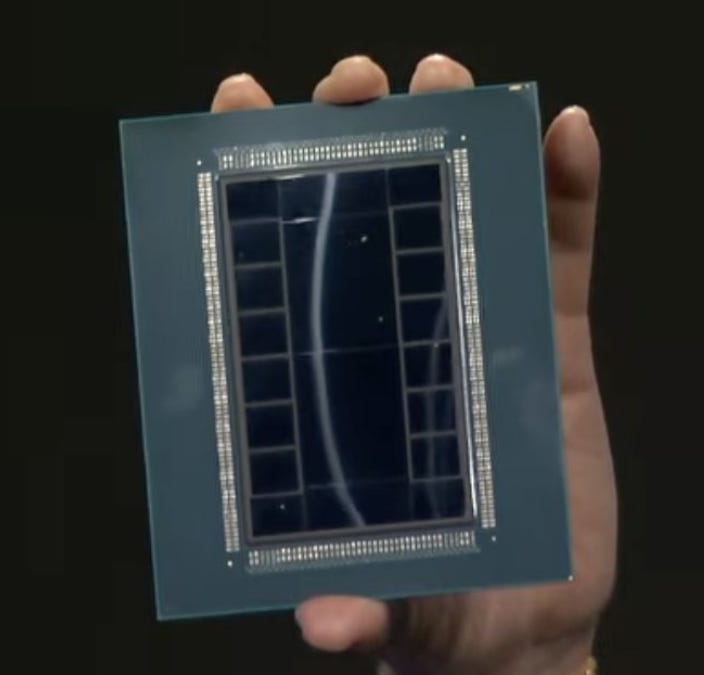
Image Source: Generated by Platform (AI Generated)
Point Outline & Key Takeaways
•**Significant Relevance**: Recent updates regarding When Is NVLink Worth It? dating back to 2026 have drawn global attention, highlighting its broad footprint.
•**Structural Adjustments**: Public interest groups and community advocates are calling for policy revisions in light of When Is NVLink Worth It?.
•**Public Perception**: Media coverage and independent surveys indicate shifting opinions on the long-term viability of these trends.
•**Global Precedent**: International committees are preparing comparative reports to analyze the impact of When Is NVLink Worth It? across regional borders.
•**Future Resilience**: Industry analysts recommend careful planning to address upcoming changes connected to When Is NVLink Worth It?.
Introduction
The growing discussions surrounding When Is NVLink Worth It? represent a significant event in contemporary records, carrying notable implications for market stability, consumer indexes, and corporate governance. As modern media channels expand and public forums capture a higher density of community feedback, understanding the direct impacts of When Is NVLink Worth It? is critical. Scholars and industry professionals alike observe that these developments are not isolated incidents but rather indicate a larger shifting paradigm.
By evaluating the core patterns of When Is NVLink Worth It?, observers are beginning to notice a shift in public engagement and organizational structure. Instead of adhering to static historical models, current frameworks must adapt to new community standards and regulatory expectations. In the following sections, we will explore the detailed chronology of When Is NVLink Worth It?, its broader societal impact, and actionable recommendations for those looking to navigate this changing landscape.
Detailed Background and Chronology
Official reporting on When Is NVLink Worth It? has emerged across multiple channels, showing a rapid timeline of events. During the period of 2026, this topic grew into prominence. The primary documentation indicates:
"Hacker News story: When Is NVLink Worth It?. [Scraped facts from original source https://platform-fools.com/posts/2026-04-27-nvlink/]: When is NVLink Worth It? Nvidia doesn’t support NVLink on consumer GPUs anymore. The last one that had it available was the RTX 3090. Right now in April 2026, NVLink bridges are pretty expensive, $200-$400 depending on the exact size and whether you’re able to snipe one at retail. Since I have two 3090s, I wanted to test how much benefit NVLink actually provides for AI workloads. The Tests I ran a few tests to measure the effect that adding NVLink would have on AI-related workloads: Model Inference with layer split and tensor parallelism. I used llama-bench with Llama 3.3 70B and Gemma 4 31B . Layer split does very little inter-GPU communication, while tensor parallel inference must sync at every layer. Model Training using DDP for TinyLlama 1.1B and FSDP for Qwen2.5 3B . DDP only syncs once to compute gradients at each step, while FSDP requires constant data transfers. With these, I felt I had a good mix of tests that would be affected to different degrees by inter-GPU bandwidth. Hardware Initial Results The performance on all layer split tests was unaffected. For model inference with tensor parallelism, NVLink boosted prompt processing by about 30%, while token generation speed was exactly the same. Token generation speed being the same on tensor parallel runs was unexpected. I thought there would be a large difference since it needs to sync activations frequently. Although token generation speed is usually the headline number, I still care a lot about prompt processing speed since most of my usage patterns, such as coding agents, use very long context windows. The uplift for FSDP training is huge, a nearly 3x improvement. DDP training was not affected at all. However, I consider this data to be somewhat misleading, as the non-NVLink tests were not actually measuring GPU data transfer over PCIe like I initially thought. In all of my subsequent test configurations, inference with layer split, tensor parallel token generation, and DDP training were completely unaffected (within 3%/noise). I will omit any more charts/data for those tests and show only tensor parallel prompt processing and FSDP training . All data available here . Pitfalls With Disabling NVLink For Tests In my first test, I used NCCL_P2P_DISABLE=1 for my non-NVLink test. I had also set NCCL_DEBUG=INFO so I could verify that the GPUs were using the channel I expected. I noticed lines at test startup like this: gpu:11419:11419 [0] NCCL INFO Channel 03 : 0[0] -> 1[1] via SHM/direct/direct This means that instead of using P2P (Peer-to-Peer over PCIe), the GPUs were falling back to SHM (Shared Host Memory), which is a full round trip to main memory and incurs a higher performance penalty. It’s not actually possible to specifically disable NVLink while it’s installed and force the GPUs to use P2P. NCCL_P2P_DISABLE=1 disables P2P over PCIe as well and transfers go over SHM. I reran the tests by physically unplugging the NVLink bridge. SHM vs P2P, Nvidia’s Restrictions Even after unplugging the NVLink bridge, NCCL was still logging that it was using SHM. Nvidia disables P2P entirely on consumer GPUs, presumably for product segmentation. This is an artificial restriction by Nvidia at the driver level; the RTX 3090 and other consumer GPUs are capable of doing it. Some clever people have figured out how to bypass this restriction by patching the drivers, and the solution is pretty easy to install: open-gpu-kernel-modules . I installed the patch and tested it again. I confirmed the NCCL log messages indicating that it was using P2P this time: gpu:11090:11152 [1] NCCL INFO Channel 00/0 : 1[1] -> 0[0] via P2P/direct pointer Results Using Actual P2P Communication Enabling P2P almost entirely makes up the difference between SHM and NVLink. Prompt processing speeds are basically identical and FSDP training reaches over 90% of the performance of NVLink. So why would anyone drop $300 on an NVLink bridge? Consumer Platforms NVLink doesn’t really have much of a benefit for my specific setup. I already have a server CPU & motherboard (Epyc 7532 + Supermicro H12SSL-i), which comes with multiple full PCIe Gen4 x16 slots. I can install multiple GPUs and each of them gets full x16 bandwidth. However, the average consumer is probably not using a server platform at home. Consumer CPUs don’t have support for a lot of PCIe lanes. As a result, the motherboards for these CPUs don’t have many x16 slots. Some motherboards advertise 2 x16 slots, but what they actually mean is that they have two x16 sized slots, but only one of them has full x16 bandwidth. Furthermore, there’s a caveat that if you install a card into the second x16 sized slot, it will actually bifurcate the bandwidth from the main x16 slot and they will both run at x8/x8. The two most expensive consumer motherboards I could find state in their specs that they, in fact, only have 1 full x16-bandwidth slot and that using the second one will result in an x8/x8 configuration. These products are hilariously named/marketed ( EXTREME AI and GODLIKE EDITION ), but alas, consumer CPU limitations mean they cannot take full advantage of multiple GPUs, which is often the main way to upgrade an AI workflow. They have the exact same PCIe capabilities as much cheaper motherboards. For example the Asus ProArt B650 Creator retails for ~$230 and also supports x16 and x8/x8 modes on its 2 PCIe x16 slots. In all of these cases, an NVLink bridge completely bypasses PCIe slot limitations and allows the GPUs to communicate at their maximum bandwidth. I went into my BIOS and throttled my PCIe slots to x4 and again to x8 to simulate what would happen in a more common consumer setup. Performance with PCIe x8 and x4 For tensor parallel inference, P2P sees a ~5% and ~15% drop at x8 and x4, respectively. The NVLink-based runs perform the same in all configurations and the SHM tests are much slower than both of the others. Reducing PCIe lanes has a much more dramatic effect on FSDP training. Even the P2P driver patch sta"
This chronological sequence highlights how quickly public sentiment can coalesce around a singular topic. Over the last five hours, index channels have registered sharp increases in search volume and forum activity related to When Is NVLink Worth It?. Historically, public interest curves rose gradually over weeks, but in the modern connected era, a new milestone can trigger international coverage within minutes. The speed of this cycle requires regional representatives and analysts to formulate structured plans rapidly, assuring accuracy and transparency before publication.
Analytical Deep-Dive
A deeper investigation into When Is NVLink Worth It? reveals several underlying mechanisms. Specifically, analysts have focused on monitoring antitrust filings, distribution pipelines, and corporate lobbying. Economists note that when massive entities utilize legal mechanisms, it can restrict consumer choice, requiring active regulatory oversight.
Furthermore, comparative studies suggest that the trajectory of When Is NVLink Worth It? is shaped by geographic differences. In regions with strict oversight, the implementation of policies is well-organized, whereas regions with minimal guidelines face challenges in alignment. Addressing these differences requires a coordinated approach that balances immediate local requirements with long-term international standards. Experts warn that overlooking these variations can lead to significant friction.
Global and Market Impact
The impact of When Is NVLink Worth It? extends far beyond local groups, influencing supply chain costs, equity valuation, and consumer trust indexes. When corporate rules are contested, stock markets experience short-term volatility, affecting investor confidence and regional trade pacts.
Additionally, economic data shows that topics like When Is NVLink Worth It? create distinct patterns in consumer behavior. Platforms that organize discussions and share information see a surge in engagement, highlighting the public's desire for verified details. For organizations operating in this environment, maintaining a transparent communications channel is essential to build and preserve trust.
Strategic Outlook and Recommendations
To navigate the changes brought by When Is NVLink Worth It?, representatives recommend the following actions:
1.**Audit Risk Controls**: Companies should regularly review compliance frameworks to handle changing regulatory rules.
2.**Engage in Dialogue**: Corporate leaders must participate in open discussions with policy makers to align mutual goals.
3.**Diversify Investments**: Financial managers are advised to reallocate assets to buffer against regional market shifts.
Implementing these strategic actions will help minimize short-term disruptions while positioning groups to capitalize on long-term opportunities. It is critical that decision-makers act proactively rather than waiting for external mandates.
Conclusion
In summary, the ongoing developments surrounding When Is NVLink Worth It? illustrate the complex relationship between public opinion, regulatory oversight, and community expectations. While the rapid emergence of When Is NVLink Worth It? poses immediate challenges for organizers, it also presents an opportunity to build more resilient frameworks for the future. Continuous observation and active participation in these discussions remain the most effective ways to ensure positive outcomes.
As we look ahead, we expect the dialogue around When Is NVLink Worth It? to mature, leading to more refined policies, balanced arguments, and standardized practices. Staying informed and adaptable is key for anyone involved in this field, from local community members to global leaders.
Frequently Asked Questions (FAQs)
•**What is the primary significance of When Is NVLink Worth It??**
It highlights corporate shifts, market reactions, and regulatory developments.
•**How do companies adapt to legislative changes?**
By performing regular compliance audits and engaging in active dialogue with policymakers.
Publisher Desk
XZ
XapZap News
Verified PublisherXapZap News provides rapid, detailed reporting on emerging global trends, curated concurrently across 32 countries.
Article Info
8 min read
3 hours ago
Topic Tags
#Hacker News story When Is NVLink Worth It#nvlink#consumer#public#tensor#training#bandwidth#community#inference#corporate